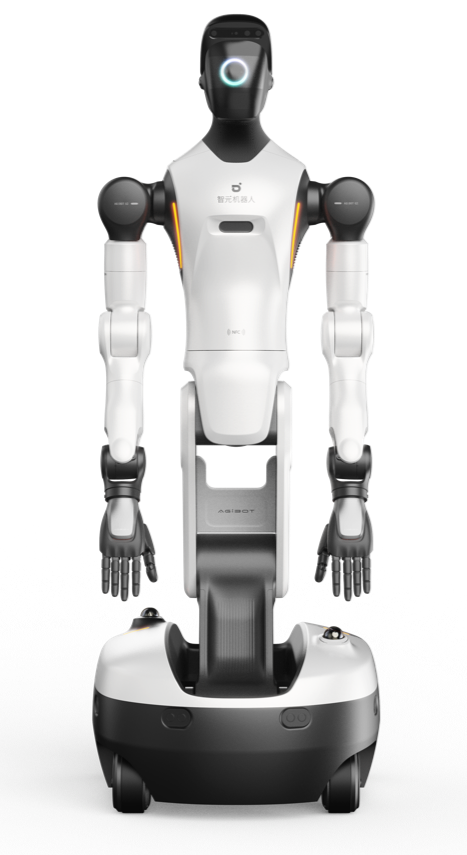
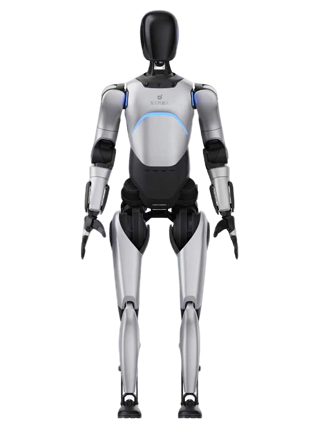
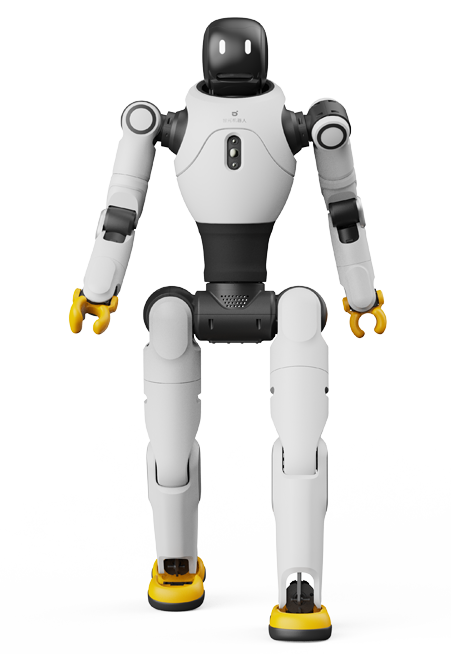
Humanoid robotics for concrete factory tasks

Is your factory task ready for a humanoid pilot?

We assess task fit, automation alternatives and the most important technical and operational unknowns—before you select a robot or commit pilot budget.

Humanoid-firstSolution-agnosticDACH manufacturing
Architecture before brandNo humanoid at any cost
Go/no-go is validThe right answer may be an alternative
Measurable criteriaAssess cycle, intervention and recovery explicitly
Engineering-ledFor manufacturers across DACH
The decision before the robot

A successful pilot starts with the use case.

An impressive demonstration is not yet a useful industrial system. Before capital is committed, the task needs a technical, operational and commercial case.

01

Which task creates enough value?

Start with measurable operational pain, not a technology mandate.

02

Is a humanoid the right architecture?

Compare humanoids against mobile manipulators, cobots, AMRs and fixed automation.

03

What autonomy is realistic?

Define teleoperation, demonstration data, failure recovery and human intervention explicitly.

04

How does it enter production?

Plan interfaces, safety, cybersecurity, acceptance tests, support and operating ownership before deployment.

Choose by buying stage

One clear next step for where you are now.

Exploring / One decision

Robotics Decision Intensive

A private three-hour working session and written memo for one important use-case, platform or architecture decision.

Validating / Primary offer

Humanoid Factory Feasibility Sprint

Turn a real factory task into a defensible go/no-go decision, platform recommendation, business case and pilot plan.

Deploying / Validated use case

Production Pilot Deployment

Engineer, integrate and commission the robot, Physical AI, factory interfaces and operating model as one measurable project.

Delivery architecture

Decide. Validate. Deploy and scale.

Each stage earns the right to make the next, larger commitment.

01 / Decide

Select the right problem

Clarify the task, constraints, stakeholders and whether humanoid morphology creates a real advantage.

02 / Validate

Remove critical unknowns

Compare platforms, test assumptions, model the economics and define a safe production pilot.

03 / Deploy + Scale

Prove useful operation

Integrate, commission and measure one robot before expanding capabilities, sites and fleet operations.

Promising first applications

Flexible work in human-designed factories.

Humanoids are most credible where mobility and manipulation must coexist, task variation is meaningful, and redesigning the entire environment is uneconomic.

Review all applications and counter-indications →

Handling / High mix

Kitting and parts handling

Variable parts and human-scale fixtures where a fixed cell may be too inflexible.

Mobility / Brownfield

Line-side replenishment

Move totes, kits and components between existing workstations without rebuilding the facility.

Interaction / Equipment

Machine loading

Serve several human-operated machines with controlled loading, unloading and recovery.

Sensing / Mobile

Inspection and data capture

Collect visual, thermal or acoustic evidence across changing industrial environments.

Engineering capabilities

The technical stack between concept and production.

01

Robotics engineering

ROS 2, robot SDKs, motion planning, perception, controls and tooling interfaces.

02

Physical AI

Teleoperation, demonstration capture, imitation learning, model adaptation and evaluation.

03

Simulation + validation

Digital twins, Isaac Sim, reach analysis, synthetic data, cycle-time and failure testing.

04

Industrial deployment

PLCs, MES/WMS, networks, safety engineering, cybersecurity, commissioning and support.

Built for the whole buying group

Technical feasibility is only one approval.

Operations

Throughput, disruption, staffing and recovery.

Engineering

Technical fit, interfaces and maintainability.

Finance

Capital, operating cost, scenarios and risk.

Safety

Hazards, operating modes and conformity pathway.

IT / OT

Network boundaries, access, logging and updates.

Leadership

Operational value, strategic learning and scale.

Evidence of industrial delivery

Published AI automation case studyMüller Präzisionswerkzeuge

How Müller Präzisionswerkzeuge Reduced Order-to-Delivery Time by 20% with AI-Driven Report Management from SchmidtFactories

20% faster order-to-delivery throughput
“The implementation of SchmidtFactories has significantly accelerated our internal processes. Our sales team saves valuable time every day on documentation, while engineering and support can access complete information much faster. What mattered most to us was improving speed without adding organizational complexity. The 20% reduction in throughput time clearly demonstrates the value.”
Industrial engineering workstation

Which task should the robot perform?

A task family and broad objective are enough. You will receive a personal initial view within one business day.

Check your use case